Updated: September 2026.
What to avoid in shampoo for colored hair: sulfates (Sodium Lauryl Sulfate, Sodium Laureth Sulfate), drying short-chain alcohols (ethanol, isopropyl alcohol), and sodium chloride (salt) are the ingredients most often linked to noticeable color fading. But no single ingredient tells the whole story — the complete formula, your washing frequency, and your hair's condition all play a role too.
If you have color-treated hair, choosing the right shampoo helps maintain your color and keeps hair from becoming unnecessarily dry or damaged. Hair-color fading depends on several factors: how often you wash, the shampoo's cleansing system, pH, water exposure, heat, UV exposure, and the condition and porosity of your hair. A shampoo formulated for color-treated hair is typically designed to cleanse more gently while still supporting the condition of the hair.
Quick Answer: Shampoo Ingredients to Avoid for Colored Hair
These are the ingredients to avoid in shampoo for colored hair if you want to minimize noticeable fading:
- Sulfates (Sodium Lauryl Sulfate, Sodium Laureth Sulfate) — strong cleansing agents that can strip color molecules along with everyday dirt and oil.
- Parabens — preservatives that some people prefer to avoid, though evidence for a direct color-fading effect is weak (more on that below).
- Drying alcohols (ethanol, isopropyl alcohol) — added for volume, but leave color-treated hair dry, brittle, and faster to fade.
- Sodium Chloride (salt) — draws moisture from hair and scalp, which can accelerate fading.
That said, no single ingredient tells the whole story. Be cautious with shampoos that are:
- Very strongly cleansing or designed for frequent deep cleansing
- Intended primarily for clarifying or removing heavy buildup
- Drying for your particular hair type
- Used excessively or with very hot water
Sulfate-free shampoo can be a useful option for color-treated hair, but "sulfate-free" alone does not guarantee a shampoo is color safe — the complete cleansing and conditioning system matters. It's also important not to assume every complicated-sounding ingredient is harmful: parabens, fatty alcohols, Cocamidopropyl Betaine, and silicones shouldn't automatically land on a "bad ingredients" list — more on that below.
What Actually Makes Hair Color Fade?
Hair color changes gradually with normal washing and environmental exposure. Shampoo is only one part of the equation.
Washing and Water
Every wash exposes colored hair to water and cleansing ingredients, which can gradually reduce color intensity over time. If your hair and scalp don't require daily washing, reducing unnecessary washes may help you keep your color longer.
Shampoo Cleansing Strength
Shampoo contains surfactants that remove oil, dirt, and styling residue. There is no single ingredient that determines whether a shampoo preserves or fades color — the type and combination of surfactants, the rest of the formulation, and how often the product is used all matter. A 2019 industry study covered in Personal Care magazine found that swapping harsher sulfates for milder anionic surfactants, or adding amphoteric co-surfactants, measurably reduced the rate of color fading during repeated shampoo washing.
Shampoo pH
The pH of a hair-care product can influence how the hair fiber behaves during washing. Chemically treated hair may benefit from a well-formulated, appropriately pH-balanced cleansing product rather than an unnecessarily harsh one.
Heat
Very hot water and frequent heat styling can make already dry or chemically treated hair feel rougher and harder to manage. Lukewarm water and heat protection reduce unnecessary stress.
UV Exposure
Sun exposure also contributes to changes in colored hair. If your hair sees a lot of strong sunlight, consider protective hair-care practices alongside your shampoo choice.
Damaged or Porous Hair
Bleaching, repeated coloring, and heat styling change hair's structure and condition. More porous or damaged hair may be less able to retain color and moisture — so someone with freshly colored, bleached, and brittle hair may need a different routine than someone with healthy, minimally processed hair.
Shampoo Ingredients and Formulations to Watch
Instead of a blanket list of ingredients everyone must avoid, consider these categories:
Strong Cleansing Systems
Useful for removing heavy buildup, excess oil, or styling residue — but not necessarily the best everyday shampoo if your color-treated hair is dry, fragile, or highly porous. Look at the complete surfactant system rather than rejecting a product over one ingredient.
Drying Short-Chain Alcohols
Ethanol, alcohol denat., and isopropyl alcohol can be drying depending on formulation and concentration. If your hair is already dry or brittle, a formula that doesn't leave hair feeling stripped is usually the better choice.
Clarifying and Chelating Shampoos
Useful when minerals or buildup accumulate on the hair, but not necessarily the best everyday shampoo for freshly colored or very dry hair. Use them when there's a specific reason to remove buildup, not on the assumption that stronger cleansing is always better.
Sodium Chloride
Salt is sometimes used as a thickening or viscosity-adjusting ingredient. Its presence alone doesn't prove a shampoo will strip color — consider the complete formula and how it performs on your own hair.
Fragrance and Preservatives
Used for legitimate formulation purposes and not automatically color-stripping. People with sensitive scalps can have individual reactions to specific ingredients — treat scalp irritation as a separate concern from color fading.
Ingredients You Don't Automatically Need to Avoid
One of the biggest mistakes when choosing a shampoo for colored hair is treating every unfamiliar ingredient as harmful.
Parabens
Parabens are preservatives used to prevent microbial growth — not cleansing agents. The U.S. Food and Drug Administration states that parabens have not been shown to be harmful as used in cosmetics, where they're present only in very small amounts. If you prefer paraben-free cosmetics for other reasons, that's reasonable — but paraben-free shouldn't be read as meaning a shampoo will protect color better.
Cocamidopropyl Betaine
An amphoteric surfactant commonly used in milder cleansing systems. It shouldn't automatically be classified as color-stripping, though individual scalp sensitivities vary.
Fatty Alcohols
Don't confuse fatty alcohols with short-chain drying alcohols. Cetearyl alcohol, cetyl alcohol, and stearyl alcohol are commonly used for conditioning and texture. Seeing the word "alcohol" on a label doesn't automatically mean a product is drying or unsafe for colored hair.
Silicones
Often unnecessarily placed on ingredient "avoid" lists. Some silicones improve slip, smoothness, and manageability, and certain silicone-containing systems have been studied for reducing color change from washing and environmental exposure. Whether a particular formula works for you depends on the complete product and your hair type.
What Makes a Shampoo Color Safe?
A genuinely useful answer to "what makes shampoo color safe" goes beyond "sulfate-free":
1. A Suitable Cleansing System
The shampoo should clean effectively without leaving hair unnecessarily dry or rough.
2. Appropriate Formulation and pH
A well-designed formula should suit the intended hair type and use.
3. Conditioning Ingredients
These improve softness, manageability, and the feel of chemically treated hair. Look for a formula addressing your hair's condition rather than focusing on a single "clean" ingredient list.
4. Color-Protective Technologies
Conditioning polymers and other film-forming ingredients are designed to help protect the hair fiber during washing — another reason the entire formulation matters more than counting absent "bad" ingredients.
5. Protection From Environmental Exposure
UV exposure and heat also contribute to color change. Shampoo is only one part of a complete color-maintenance routine.
Quick Reference: Avoid vs. Look For
| Avoid or Use Cautiously | Look For |
|---|---|
| Strongly cleansing / sulfate-heavy systems | Gentle surfactants (e.g., Cocamidopropyl Betaine) |
| Drying short-chain alcohols (ethanol, isopropyl alcohol) | Fatty alcohols (cetearyl, cetyl, stearyl) for conditioning |
| Frequent clarifying / chelating shampoo | Everyday gentle formula, clarify only occasionally |
| Very hot water & excessive washing | Lukewarm water, wash only as often as needed |
| No protective technology | Conditioning polymers, UV filters, antioxidants |
Reading a Label at a Glance
You don't need a chemistry degree to spot a well-formulated color-safe shampoo. Start with the intended use — is it formulated for color-treated hair? — then look past "sulfate-free" to the entire cleansing and conditioning system, and finally consider your own hair's condition. A shampoo that works well for healthy, oily hair may not be the best choice for bleached, porous, or brittle color-treated hair.
For a full, step-by-step label-reading walkthrough, see our guide: How to Know If a Shampoo Is Color Safe.
Is Sulfate-Free the Same as Color Safe?
No. A sulfate-free shampoo can be an excellent choice for some people with color-treated hair, but sulfate-free does not automatically guarantee superior color protection. What matters is the entire formula — cleansing system, conditioning ingredients, pH, and how the product interacts with your particular hair.
If your hair is dry, fragile, or highly processed, a gentler-feeling cleansing system may be preferable. If your scalp is oily or your hair has significant buildup, you may occasionally need a stronger cleansing product. The best choice depends on your hair's condition and how often you need to wash it.
What If Your Color-Treated Hair Is Already Damaged?
If your hair is bleached, brittle, dry, or prone to breakage, color protection shouldn't be your only consideration. Look for a routine that minimizes additional stress from:
- Excessive washing
- Very hot water
- Frequent high-heat styling
- Repeated chemical processing
- Unnecessary clarifying
- Rough brushing or detangling
Use conditioner after shampooing and consider additional conditioning treatments if needed. If your hair is severely damaged or breaking, a professional hair stylist or dermatologist can help determine the right approach.
Color-Safe Shampoo: 7 Myths vs. Facts
Myth 1: All sulfates immediately strip hair color.
Fact: The complete cleansing formulation and washing routine matter. Sulfate-free is not the only factor in color protection.
Myth 2: Every alcohol is bad for colored hair.
Fact: Short-chain alcohols and fatty alcohols have different properties and functions.
Myth 3: Paraben-free automatically means color safe.
Fact: Parabens are preservatives. Their absence doesn't by itself determine how well a shampoo preserves color.
Myth 4: Natural shampoo is automatically better for colored hair.
Fact: "Natural" doesn't tell you how strong the cleansing system is or how the formula performs on color-treated hair.
Myth 5: Expensive shampoo always protects color better.
Fact: Price is not a reliable measure of color protection.
Myth 6: Sulfate-free means the shampoo is automatically gentle.
Fact: A sulfate-free formula can still contain other cleansing ingredients unsuitable for a particular person's hair.
Myth 7: Shampoo is the only reason hair color fades.
Fact: Washing, water, heat, UV exposure, hair porosity, and hair condition all contribute.
How to Make Hair Color Last Longer
Choosing an appropriate shampoo is only part of the routine.
Wash Only as Often as Your Hair and Scalp Require
Reducing unnecessary washes minimizes repeated exposure to water and cleansing agents.
Use Lukewarm Water
Avoid very hot water when washing color-treated hair.
Condition After Washing
Conditioner improves softness, smoothness, and manageability.
Protect Your Hair From Heat
Use appropriate heat protection and avoid unnecessary high-temperature styling.
Consider UV Exposure
If your hair spends a lot of time in direct sunlight, use protective measures.
Don't Overuse Clarifying Shampoo
It has a purpose, but doesn't need to replace your everyday shampoo.
Follow Your Colorist's Aftercare Instructions
Different coloring services have different aftercare requirements — follow what your stylist recommends for your specific service.
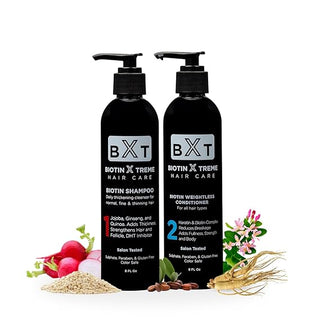
Can Biotin Xtreme Natural Biotin Shampoo Be Used on Color-Treated Hair?
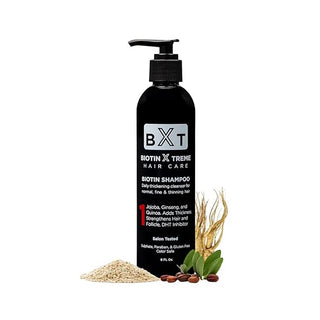
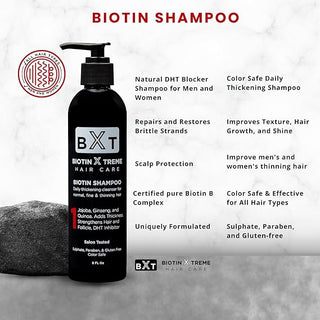
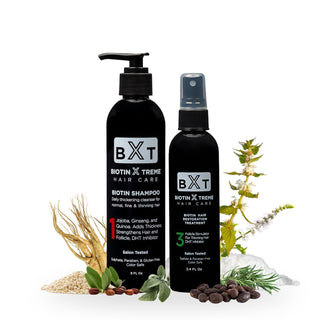
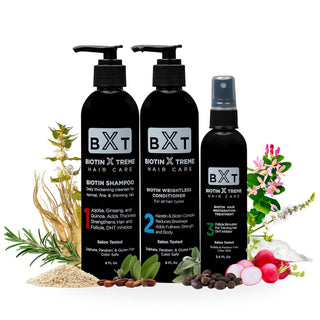
Biotin Xtreme's Natural Biotin Shampoo is formulated to be sulfate-free, paraben-free, and gluten-free, and is marketed as color safe for daily use. Its key ingredients include Biotin B7 Complex, Ginseng, Licorice, Jojoba, Niacin, Quinoa Protein, and Honeysuckle.
Rather than choosing a shampoo simply because it says "color safe," compare its full ingredient list with your hair's needs. The most important considerations for a daily color-treated-hair shampoo are whether the cleansing system feels appropriate, whether it leaves hair excessively dry, and whether the overall formula fits your hair and scalp.
Shop the Natural Biotin Shampoo
Frequently Asked Questions
What ingredient in shampoo strips hair color?
Sulfates (Sodium Lauryl Sulfate and Sodium Laureth Sulfate) are generally considered the most likely to cause noticeable fading — they're strong cleansing agents that strip color molecules along with everyday dirt and oil. That said, no single ingredient universally determines how fast color fades; the complete cleansing system, pH, washing frequency, and hair condition all play a role.
What ingredients should I avoid in shampoo for colored hair?
Sulfates, drying alcohols, and sodium chloride are the ingredients most often linked to fading. Beyond specific ingredients, be cautious with strongly cleansing or clarifying formulas if your hair is dry, fragile, or highly processed, and notice whether a product leaves your hair feeling stripped after washing.
Is sulfate-free shampoo always better for colored hair?
No. Sulfate-free can be a useful option, but it does not automatically make a shampoo color safe. Evaluate the entire formula.
Are parabens bad for color-treated hair?
Parabens are preservatives, not cleansing agents, and the FDA states they have not been shown to be harmful as used in cosmetics. There isn't a strong basis for treating parabens as a primary color-stripping ingredient.
Is sodium chloride bad for colored hair?
Not automatically. Sodium chloride can serve as a formulation ingredient, including as a thickening aid. Evaluate the complete shampoo rather than treating salt alone as proof a product will fade color.
Are silicones safe for color-treated hair?
Silicones aren't automatically harmful to color-treated hair. Some improve smoothness and manageability, and certain silicone-containing systems have been studied for color-protection effects.
Are all alcohols bad for color-treated hair?
No. Short-chain alcohols and fatty alcohols are different categories. Cetearyl, cetyl, and stearyl alcohol shouldn't be treated like drying alcohols.
How can I tell if a shampoo is color safe?
Look beyond "sulfate-free." Consider the complete cleansing system, conditioning ingredients, intended use, formulation, and how the product performs on your hair.
Can clarifying shampoo strip hair color?
Strong cleansing can contribute to wear over repeated washing, so clarifying shampoo is best viewed as a targeted product for removing buildup rather than an everyday choice for fragile, freshly colored hair.
Does shampoo pH affect hair color?
pH can influence the hair fiber's behavior during cleansing. For chemically treated hair, an appropriately formulated shampoo is preferable to an unnecessarily harsh one.
Does hot water make hair color fade faster?
Hot water can contribute to dryness and make chemically treated hair harder to manage. Lukewarm water is generally the better choice.
What is the best shampoo for damaged color-treated hair?
The best choice depends on the type and severity of the damage, but as a general guide, look for a gentle, sulfate-free, paraben-free formula — like our Natural Biotin Shampoo — that cleanses without leaving hair excessively dry, then pair it with regular conditioning and heat protection.
About the Author
This article was written by Steve Haymes for Biotin Xtreme Hair Care. Learn more about our team and approach to hair care on our Meet Our Founders page.
Related Reading
Not sure how to spot a color-safe label at the store? See our full guide on how to know if a shampoo is truly color safe.
Looking for a full product recommendation? Check out our picks for the best sulfate-free shampoo and conditioner for colored hair.