By Steve Haymes, Founder of Biotin Xtreme Hair Care & Cuts Inc. — Hair Loss and Hair Care Specialist, 40+ years of salon experience, Named Best of Atlanta by CBS News
If you're looking for the best shampoo and conditioner for chemo hair, or a shampoo for cancer patients more generally, because chemotherapy is already causing hair loss, we want to be straightforward with you before anything else: no chemo shampoo — ours included — prevents or reverses chemo hair loss. That loss happens because chemotherapy targets fast-dividing cells, and hair follicle cells are among them — it's not something that happens on the hair's surface, so nothing applied to the hair's surface can stop it. What gentle hair and scalp care can do is make the experience more comfortable and protect the hair you still have from unnecessary breakage. Here's what actually helps, what doesn't, and what's worth asking your care team about.
Does Any Shampoo Prevent or Reduce Chemo Hair Loss?
No. This is worth stating plainly because so much is marketed otherwise. According to Memorial Sloan Kettering Cancer Center, the options that can actually reduce hair loss during chemotherapy are medical, not cosmetic: scalp cooling (using a cooling cap system during treatment) and certain prescription medicines, including minoxidil, dutasteride or finasteride, and spironolactone. Both are decisions to make with your oncology team, not a shampoo aisle decision. A gentle shampoo has a real, more modest role — described below — but it is not a hair-loss treatment, and we won't market it as one.
What Gentle Hair and Scalp Care Can Actually Do
Chemotherapy can dry out skin and the scalp, and hair that's already stressed by treatment is more prone to breakage from harsh products or rough handling. This is where a gentle routine genuinely helps: a mild, sulfate-free, paraben-free shampoo cleans without stripping an already-sensitive scalp, which can mean less irritation and less unnecessary breakage of the hair you still have. That's a real, modest benefit — comfort and gentleness — not a way to stop shedding that's being driven by the chemotherapy itself.
Caring for Your Hair and Scalp During Chemo
- Wash every 2 to 4 days with a mild, gentle shampoo rather than daily — this matches general oncology guidance and reduces unnecessary handling of fragile hair.
- Brush or comb gently with a soft-bristle brush rather than a hard-bristled one.
- Pat hair dry instead of rubbing, and skip heat styling, hair dye, bleach, and chemical perms during treatment.
- Protect your scalp from the sun — thinning hair means less natural coverage, so a hat or sunscreen made for the scalp matters more than usual.
- If you're planning to cut your hair shorter before significant shedding starts, many people find that easier emotionally — there's no medical requirement to do this, it's purely a personal choice.
What Happens to Your Hair After Treatment Ends
Hair generally starts growing back once chemotherapy ends, with noticeable regrowth typically taking 3 to 5 months, according to MSKCC. It's common for regrown hair to come in a different texture or color than before — curlier, straighter, grayer, or finer are all normal. In rare cases, hair doesn't grow back as full as it was, and there's a small chance of permanent loss after radiation specifically targeting the head. This is the phase people are usually searching for the best shampoo for hair growth after chemo, or the best shampoo for chemo hair loss that's lingering past treatment — and it's where gentle, consistent hair and scalp care is most relevant, supporting new, fragile regrowth rather than trying to prevent loss that's already happened.
This is also where biotin is worth a clear-eyed note: biotin supports the body's own keratin production, and keratin is the protein that makes up hair. For most people, biotin's evidence for speeding regrowth beyond what the body is already doing is limited — it's reasonable as part of a gentle routine, not a reason to expect faster results. We've written more on what biotin actually does for hair growth here.
Talk to Your Oncology Team First
Before starting scalp cooling, any new medicine, or even a new skincare or hair product during active treatment, check with your oncology team. Chemotherapy can increase skin and scalp sensitivity and sometimes lowers immune function, which changes what's safe to use and when. If you're working with a hairdresser during this time, telling them about your treatment lets them recommend handling and products suited to what your hair and scalp are actually going through.
Where Our Biotin Shampoo and Conditioner Fit
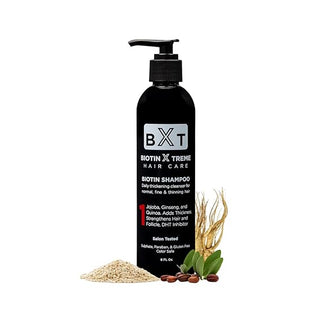
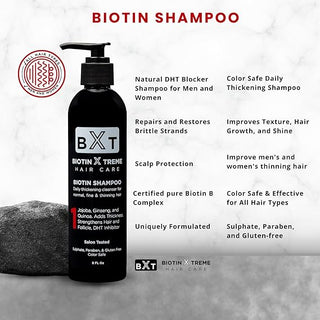
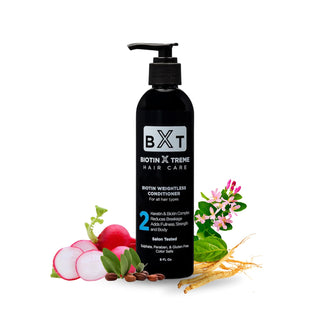
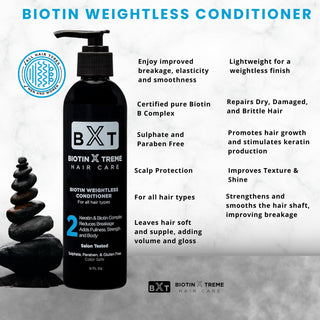
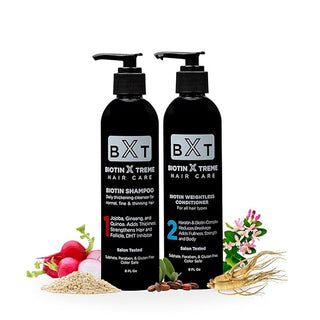
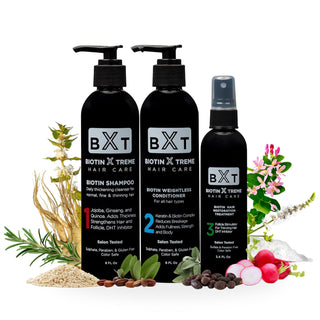
Our Biotin Shampoo and Biotin Keratin Conditioner are sulfate-free and paraben-free, which fits the gentle, low-irritation profile that's generally reasonable during and after chemo — but check with your oncology team before introducing anything new during active treatment. We'd rather you use them with accurate expectations: for comfort and gentle care, not as a treatment for chemo-induced hair loss. If an underlying nutritional deficiency is a concern separate from chemo, that's also worth raising with your care team — we have more on what causes hair-loss-related nutrient deficiencies here.
A Note From Our Founder
"Over the years, more than a few clients have come in mid-treatment, usually looking for something, anything, that might help. I've learned to be honest with them even when it's not what they want to hear: a shampoo isn't going to stop what the chemo is doing. What I can offer is a gentle routine that makes a hard few months a little more comfortable, and a plan for when their hair starts coming back. That's a smaller promise than a lot of products make, but it's the true one."
Steve Haymes is the founder of Biotin Xtreme Hair Care and Cuts Inc., and a hair loss and hair care specialist with more than 40 years of salon experience, named Best of Atlanta by CBS News. Steve reviews our hair care and styling content for accuracy; questions about medical conditions, including anything related to cancer treatment, should go to your oncology team or a dermatologist. Meet our founders.
Frequently Asked Questions
Does shampoo help with chemo hair loss?
No shampoo prevents or reverses hair loss caused by chemotherapy. A gentle, sulfate-free shampoo can make an already-sensitive scalp more comfortable and reduce unnecessary breakage, but it isn't a treatment for the hair loss itself.
What is scalp cooling, and does it work?
Scalp cooling uses a cooling cap during chemotherapy infusions to reduce hair loss for some patients with solid tumors. It's a medical option, not a cosmetic one — talk to your oncology team about whether it's appropriate for your specific treatment.
How long after chemo does hair grow back?
Hair typically begins regrowing once treatment ends, with noticeable regrowth in about 3 to 5 months. It often comes back a different texture or color than before, at least temporarily.
What should chemo patients avoid in shampoo?
Harsh sulfates, strong fragrances, and anything that stings or irritates an already-sensitive scalp are worth avoiding. Heat styling, hair dye, bleach, and chemical perms are also generally discouraged during active treatment.
Is biotin good for hair loss from chemo?
Biotin supports the body's keratin production, but there's limited evidence that extra biotin meaningfully speeds up regrowth after chemo specifically. It's reasonable as part of a gentle routine once your care team has cleared it, not as a reason to expect faster results.