‘Brush your hair 100 times a day for long and healthy locks.’ Almost all of us have heard this while growing up – a beauty tip that has been passed through generations like a sacred wisdom. There is something nostalgic and comforting about the idea. It is simple, ritualistic and oddly satisfying.
But here’s the big question: Is there any actual science behind this belief? Can a simple action like brushing your hair reactivate your hair follicles, making them produce stronger, thicker, and healthier hair? Or, is it just a fable that has been ardently reshared?
While brushing your hair is an important grooming process, the relationship between brushing and hair growth is not that straightforward. In this article, we will explore whether there is any truth behind it and also dive deep into the science behind hair growth for an evidence-based answer. how to stimulate hair follicles for hair growth
Scalp Stimulation and Blood Flow
The pro-brushing argument is simple: brushing acts as a form of scalp massage. While you brush your locks, the movement of the bristles across the scalp is supposed to surge microcirculation, bringing more oxygen to the hair follicle, also called the derma papilla, stimulating hair growth.
Regular brushing can deliver several benefits, ranging from improving scalp health by eliminating dead skin cells to untangling your hair and averting breakage.
Overall, brushing can support hair growth. At first glance, this makes sense. However, does science truly back it up?
Hair is more than just a strand sprouting from your scalp. It has a complex structure with each part playing a specific role. Modern science has proven that well-nourished hair follicles are more productive in promoting optimal hair growth.
The Scientific Verdict: Direct Growth vs. Indirect Support
The hard truth behind direct growth
Hair growth rest on on certain aspects like genetics, hormones, and distinct health factors and not on how often you brush your hair. Hence, these factors unswervingly influence how quickly your hair grows, how long it stays in each phase of the growth cycle, and how thick or thin your strands are. No amount of brushing can override these natural settings. There is no reliable technical evidence showing that brushing can increase the speed of hair growth or stimulate new hair follicle formation.
The Real Benefits of Brushing (The Indirect Effects)
Brushing plays a critical role in promoting scalp and strand health. While brushing doesn’t directly impact new hair growth or prevent hair fall, it does offer other benefits. These include:
Scalp exfoliation and cleansing: Brushing also functions as an exfoliator for the scalp. It helps remove dead skin cells, product build-ups and pollutants that accumulate around the follicles. The cleansing prevents the follicles from getting clogged, reducing the risks of irritation, dandruff, and even conditions like folliculitis that could hinder growth.
Enhancing blood flow: Brushing increases the blood flow to your scalp, helping the tresses follicles receive oxygen and other central nourishment. This progression helps reinforce your hair strands and encourage healthy hair growth.
Promote sebum distribution: Sebum is the scalp’s natural oil that creates a protective layer on your hair strands, making hair soft and shiny. While you brush, especially with a boar bristle brush, it pulls the oil down the hair shaft, preventing dryness and reducing breakage. Over time, it prevents dryness and split ends. As a result, your hair stays intact, making it appear to grow faster.
Preventing breakage: A common benefit rendered by brushing that we often overlook is that it prevents tangles. Knots in the hair can cause breakage. Brushing removes these knots by gently detangling the strands. As a result, your hair stays in the longer period of the hair growth cycle.
Hence, brushing doesn’t make your hair grow faster; it simply prevents breakage due to tangling.
The Risks of Doing It Inaccurately
While brushing is good, excessive or harsh brushing can sabotage your hair health entirely. Here’s why:
The 100 strokes myth: The idea of brushing 100 strokes daily holds no water. In fact, too much friction weakens hair shafts and stresses cuticles. These conditions can accelerate hair loss.
Mechanical stress and breakage: Using too much force while brushing can stretch and snap hair strands. This can result in split ends and rough texture.
Damaged cuticles: When you brush your mane cogently and often, it damages the shielding cuticle layer, causing frizziness, dryness and tangling.
Causing scalp irritation: Aggressive brushing irritates the scalp, leading to inflammation and even causing traction alopecia.
Overactivating sebum production: Overbrushing can cause extra sebum production, leaving the scalp oily.
The takeaway: Brushing is a useful tool to support hair health when done the correct way. Overbrushing can cause harm and damage your hair. Brushing can offer benefits only when the accurate tool, procedure, and frequency are applied.
The BXT Guide to Proper Brushing for Optimal Hair Health
If you want brushing to support your hair health, here is the smart way to do it.
Step 1: Choose the right tool
Boar Bristle Brush: For dry hair. The boar brush mimics the hair texture and aids in spreading sebum more efficiently through the length of the hair for shine and protection.
Wide-Tooth Comb: Non-negotiable for wet hair. Your hair is most fragile when damp. The wide tooth of the comb detangles the hair gently without pulling and breaking.
Detangling Brush with Flexible Bristles: This is specialized brush designed for tangled hair. Its bristles gently loosen the knots from dry or slightly damp hair without damaging it.
Step 2: Perfect the art of combing
- Always brush your hair from the tip and gradually work your way up. This will prevent the knots from traveling down and becoming a bigger mess.
- Divide your hair into sections and brush gently. Don’t yank through the tangles.
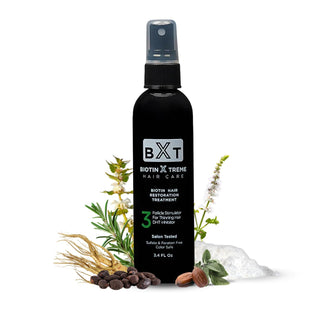
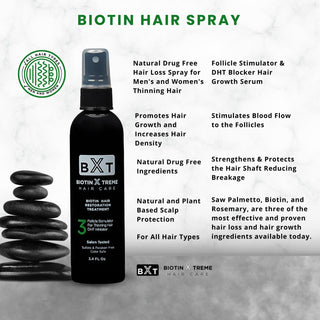
- Since wet hair tends to break easily, you can use a wide-tooth comb while brushing. Gently brush through the sections and use Biotin Xtreme DHT Blocker Spray to boost hair health.
Step 3: Find the right frequency
Depending on the type of your hair, pick the right brushing frequency and technique.
- For curly and coily hair, daily brushing may damage the natural texture. Brushing only while conditioning in the shower usually helps preserve natural curl and prevent frizz.
- If you have straight or wavy hair, a light brushing once or twice daily is adequate.
Final Words
So, does brushing support hair growth? The scientific answer is ‘no, it doesn’t’. However, the benefits of brushing shouldn’t be overlooked. It can play an imperative role in sustaining overall hair health that meanderingly supports growth. By maintaining overall scalp health, it ensures that the hair you already have can thrive and reach its full-length potential.
Brushing is not the miracle solution for hair health. But it is a form of maintenance. Brushing keeps your hair strong, glossy, and intact—so over time, your hair looks longer, stronger, and healthier. If you want to acquire more information about how to support hair health from the inside out, check out our comprehensive blog to gain key insights, The Top 5 Nutrients for Healthy Hair.
Whether it is a boar bristle brush, a wide-tooth comb, or a detangling brush, let us know which hair tool you use for brushing. Share your favorite tool and why in the comment section below.