Steve Haymes, Founder, Biotin Xtreme Hair Care | Reviewed for Accuracy. Updated: September 2026
Dry, frizzy hair can feel rough, look dull, tangle easily and become harder to style. While dryness and frizz often appear together, they are not the same problem. Dry hair lacks enough lubrication and conditioning, while frizz is strongly influenced by the condition of the hair cuticle, friction between hair fibers, humidity, heat styling and chemical processing.
The best shampoo and conditioner for dry, frizzy hair should therefore do more than simply clean your hair. A good routine should cleanse without leaving the hair feeling stripped, restore conditioning to the hair shaft, reduce friction and make the hair smoother and easier to manage.
At Biotin Xtreme Hair Care, our approach comes from more than 30 years of experience working with hair, scalp concerns, fine hair, processed hair and thinning hair. One thing we have consistently seen is that healthy-looking hair depends not only on what you wash it with, but also on how you wash, condition, dry and style it.
Quick Answer: What Is the Best Shampoo and Conditioner for Dry, Frizzy Hair?
Look for a shampoo and conditioner combination that:
- Cleans the scalp without leaving the hair excessively dry
- Provides conditioning and lubrication to the hair shaft
- Helps smooth the cuticle and reduce friction
- Contains moisturizing or conditioning ingredients such as jojoba
- Includes proteins or amino-acid-rich ingredients that can help improve the feel of damaged hair
- Is appropriate for color-treated or chemically processed hair
- Does not leave heavy buildup that makes fine hair appear flat
For people who also have fine or thinning hair, the challenge is finding enough conditioning to smooth dry strands without coating the hair so heavily that it loses volume.
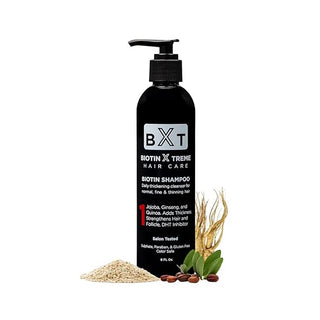
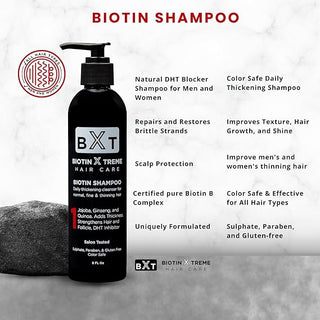
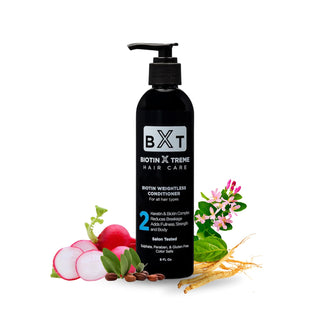
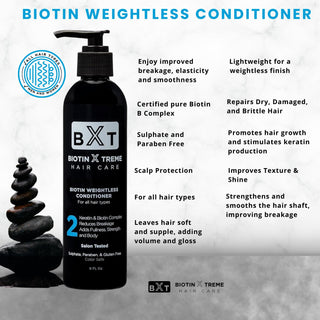
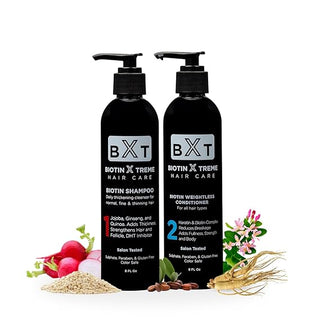
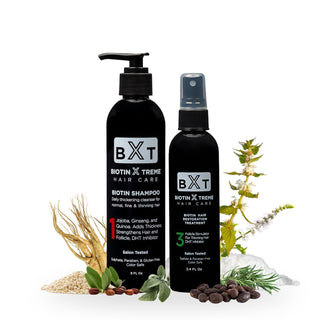
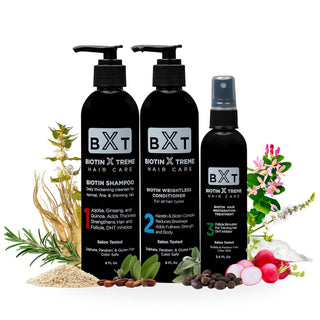
BXT’s Natural Biotin Shampoo and Biotin Keratin Conditioner were developed with this balance in mind. For a complete routine, they are also available together in the Biotin Shampoo and Conditioner Set.
What Causes Dry and Frizzy Hair?
Frizz is more complicated than simply having “dehydrated” hair.
Each strand of hair has an outer protective layer called the cuticle. When the surface becomes weathered or damaged, friction between individual hair fibers can increase. Hair may then feel rougher, tangle more easily and appear less smooth.
A peer-reviewed review of hair care physicochemistry has found that conditioners can reduce friction between hair fibers, improve combability and help flatten cuticle scales temporarily. This can improve smoothness, shine and manageability.
Heat Styling
Frequent blow-drying, flat ironing and curling can gradually weather the hair shaft, particularly when high temperatures are used repeatedly.
The damage tends to accumulate toward the older ends of longer hair because those sections have experienced more washing, brushing, environmental exposure and styling.
Hair Coloring and Chemical Processing
Hair coloring, bleaching, relaxing, perming and chemical straightening can alter the hair cuticle.
That does not mean you have to stop coloring or styling your hair. It does mean that chemically processed hair generally benefits from careful conditioning and gentler handling.
If you color your hair, read our guide to choosing the best sulfate-free shampoo and conditioner for colored hair.
Mechanical Damage
Hair can also become weathered from ordinary grooming.
Aggressive towel drying, repeated brushing, detangling roughly when wet and pulling through knots can increase mechanical stress on already fragile strands.
Curly and Textured Hair
Curly hair often needs additional conditioning because scalp oils do not always distribute along bends and curls as easily as they do along straight hair.
This is one reason people with curly hair frequently experience dryness toward the mid-lengths and ends even when their scalp itself is not dry.
For more information, see our guide to choosing the best natural shampoo for curly or dry hair.
Humidity
Humidity can change the physical behavior of the hair fiber and contribute to frizz, particularly when the cuticle is already weathered or damaged.
That is why simply adding “more moisture” does not always eliminate frizz. Reducing fiber friction and protecting the condition of the hair surface matter as well.
What Should You Look for in a Shampoo for Dry and Frizzy Hair?
A shampoo’s first job is to cleanse the scalp and remove excess oil, sweat and product buildup.
But when hair is already dry or fragile, overly aggressive cleansing may make the lengths feel rougher.
Choose a Formula Appropriate for Your Hair Type
People with a very oily scalp may need more frequent cleansing than someone with a dry scalp. Likewise, fine hair often needs lighter conditioning than coarse, curly or highly processed hair.
There is no single washing schedule that is right for everyone.
If you’re considering a biotin-based shampoo, our guide on how often to use biotin shampoo explains how washing frequency can vary by hair and scalp type.
Look Beyond the Word “Natural”
“Natural” by itself does not tell you whether a shampoo is appropriate for your hair.
Instead, look at the complete formula and what the ingredients are intended to accomplish.
BXT Natural Biotin Shampoo includes ingredients such as jojoba, quinoa and biotin as part of a broader formula designed for healthier-looking, fuller-feeling hair.
Jojoba
Jojoba is commonly used in hair and skin products for its emollient properties. In a shampoo formula, it can contribute to a smoother, better-conditioned hair feel.
Quinoa
Plant-derived ingredients like quinoa are often incorporated into products for damaged or processed hair. Depending on the formulation, these conditioning ingredients can temporarily improve the feel and manageability of weathered hair.
Biotin
Biotin, or vitamin B7, is widely associated with hair health because biotin deficiency can affect the hair.
However, it is important to distinguish nutritional biotin deficiency from cosmetic use of biotin in shampoo. Shampoo should not be presented as a treatment for biotin deficiency or as a guaranteed way to regrow hair.
In a topical hair-care formula, biotin should be considered one component of a broader cosmetic formulation designed to support healthier-looking hair.
If you are trying to understand how biotin differs from protein-based ingredients, read Keratin vs. Biotin Shampoo: What’s the Difference?.
Why Conditioner Is Especially Important for Dry and Frizzy Hair
If your biggest concerns are dryness, tangles, roughness and frizz, conditioner may be just as important as the shampoo you choose.
Conditioners deposit ingredients onto the hair surface that can decrease friction between fibers. This can make wet and dry hair easier to comb while temporarily improving smoothness, softness and shine.
For dry, frizzy, processed or fine hair, the BXT Biotin Keratin Conditioner is designed to provide conditioning without making the hair feel unnecessarily heavy.
Keratin and Protein-Based Conditioning
Hair itself is primarily made from keratin.
Cosmetic products containing hydrolyzed keratin or other proteins do not permanently rebuild damaged hair. Hair outside the scalp is not living tissue and cannot biologically heal itself.
However, protein-based conditioning ingredients can temporarily improve the surface characteristics, strength and feel of weathered hair.
Don’t Overcondition Fine Hair
More conditioner is not always better.
Very fine hair can become weighed down when too much conditioner is used, particularly near the roots.
For fine or thinning hair, start with a small amount concentrated primarily through the mid-lengths and ends. Adjust the amount according to how your hair responds.
How to Wash Dry and Frizzy Hair
The products you choose matter, but technique matters too.
Step 1: Concentrate Shampoo on the Scalp
Apply shampoo primarily to the scalp, where oil and buildup accumulate.
You generally do not need to scrub the ends aggressively. The shampoo moving through the lengths during rinsing is usually enough to cleanse them.
If your goal is to combine gentle cleansing with lightweight volume, the BXT Natural Biotin Shampoo can be used as the cleansing step in your routine.
Step 2: Rinse Thoroughly
Product left behind can affect how hair feels and styles.
Rinse until the shampoo has been completely removed.
Step 3: Apply Conditioner to the Lengths
Apply conditioner mainly through the mid-lengths and ends, concentrating on areas that feel driest or most weathered.
The Biotin Keratin Conditioner can be paired with the shampoo as part of a regular dry-hair routine.
Very fine hair may require only a small quantity.
Step 4: Detangle Gently
Wet hair can be vulnerable to mechanical damage.
Instead of aggressively pulling a brush through tangles, work carefully from the ends upward using a wide-tooth comb or a detangling method appropriate for your hair type.
Step 5: Avoid Aggressive Towel Drying
Rubbing wet hair vigorously with a towel increases friction.
Instead, gently blot or squeeze excess water from the hair.
How to Reduce Frizz Between Washes
Your shampoo and conditioner are only part of the solution.
Reduce Excessive Heat
Whenever practical, use moderate rather than maximum heat when blow-drying.
Keep the dryer moving instead of concentrating high heat on one small area for an extended period.
Be Gentle With the Ends
The ends are the oldest section of long hair and generally show the greatest amount of weathering.
Treat them gently when brushing, styling and detangling.
Limit Unnecessary Chemical Processing
Bleaching, permanent color, chemical straightening and similar services can contribute to cumulative hair-shaft damage.
If your hair is already very dry or fragile, consider discussing the condition of your hair with an experienced stylist before another major chemical service.
People who regularly color their hair may also benefit from reviewing our guide to sulfate-free shampoo and conditioner for colored hair.
Protect Hair While Sleeping
Reducing unnecessary friction while sleeping can help preserve a smoother appearance.
Loose hairstyles and smooth pillowcase materials may be helpful for people whose hair tangles heavily overnight.
Is Dry, Frizzy Hair the Same as Damaged Hair?
Not always.
Hair can naturally be dry, particularly if it is curly, coarse or long. Frizz can also vary considerably with humidity.
However, sudden increases in roughness, split ends and breakage can indicate that the hair shaft has become weathered from heat, chemical treatments or mechanical stress.
A conditioner may temporarily improve the appearance and feel of damaged hair, but cosmetic products cannot permanently restore a severely fractured hair shaft.
Regular trims may be necessary when the ends are badly split.
Dry Hair vs. Hair Loss: Know the Difference
Dryness and breakage can sometimes make hair appear thinner, but hair breakage is not the same thing as hair loss occurring from the follicle.
If strands are breaking along their length, improving conditioning and reducing mechanical or heat damage may help protect the hair you already have.
If you are noticing increased shedding from the root, widening of your part, bald patches, scalp inflammation or progressive thinning, the cause may be unrelated to dryness.
Hair shedding can have many causes, including genetic hair loss, hormonal changes, nutritional deficiencies, medications, illness and other medical conditions.
For readers dealing with thinning in addition to dryness, our article on how to reduce thinning hair in women provides additional guidance.
A shampoo or conditioner should not be used as a substitute for medical evaluation when hair loss is persistent, sudden or unexplained.
Our Professional Hair-Care Perspective
Biotin Xtreme Hair Care was developed after more than 30 years of experience in the salon and hair-care industry.
Working with clients over the years has reinforced an important principle: there is rarely one ingredient or one product that solves every hair concern.
For dry and frizzy hair, consistency usually matters more than chasing a single “miracle” ingredient.
Use an appropriate cleanser, condition according to your hair’s texture, minimize avoidable heat and mechanical damage, and pay attention to how your individual hair responds.
For fine or thinning hair, conditioning should also be balanced with volume. Heavy buildup may make hair look flatter even when it feels soft, which is why lightweight conditioning can be especially useful.
Readers who want to learn more about biotin-based hair care can also read Is Biotin Shampoo Good for Hair Loss and Hair Growth?.
Frequently Asked Questions
What shampoo is best for extremely dry and frizzy hair?
Choose a shampoo that cleans effectively without leaving your hair feeling unusually rough or stripped, followed by a conditioner suited to the level of dryness and damage.
People with extremely dry, coarse or chemically processed hair may need richer conditioning than someone with fine hair.
Should I condition my hair every time I shampoo?
If your hair is dry, processed, curly or prone to tangling, conditioning after shampooing can help reduce friction and improve manageability.
Fine hair may require a smaller amount concentrated mainly on the lengths and ends.
Can conditioner permanently repair damaged hair?
No.
Conditioners can temporarily smooth the cuticle, decrease friction and improve the appearance and feel of damaged hair, but the exposed hair shaft cannot biologically regenerate itself.
Does biotin shampoo help frizzy hair?
Biotin itself should not be considered a direct treatment for frizz.
The overall formulation matters more. Conditioning agents, humectants, proteins, oils and other ingredients in a well-designed shampoo or conditioner can contribute to smoother and more manageable hair.
You can learn more about how biotin products fit into a hair-care routine in How Often Should I Use Biotin Shampoo?.
Is keratin good for dry and frizzy hair?
Keratin and other hydrolyzed proteins are commonly used in conditioning products for weathered or damaged hair. They may temporarily improve hair strength, smoothness and manageability.
They do not permanently rebuild severely damaged hair.
For a deeper comparison, see Keratin vs. Biotin Shampoo.
How often should dry hair be washed?
There is no universal schedule.
Your ideal frequency depends on scalp oil production, hair texture, styling products, exercise, environmental exposure and personal preference.
Wash often enough to keep the scalp comfortable and clean without repeatedly leaving the lengths feeling excessively dry.
The Bottom Line
The best shampoo and conditioner for dry, frizzy hair should work together.
Shampoo should clean the scalp without unnecessarily roughening already fragile lengths. Conditioner should reduce friction, improve detangling and leave the hair smoother and easier to style without excessive buildup.
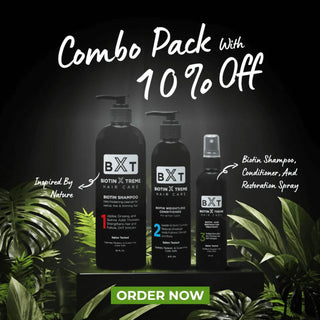
For people looking for a lightweight routine that also suits fine or thinning hair, consider pairing BXT Natural Biotin Shampoo with BXT Biotin Keratin Conditioner, or choose the complete Biotin Shampoo and Conditioner Set.
Just remember that dry, frizzy hair and true hair loss are different concerns. Cosmetic hair-care products can improve cleansing, conditioning, manageability, breakage and appearance, while unexplained or progressive hair loss deserves proper medical evaluation.
About the Author
Biotin Xtreme Hair Care was developed from more than 30 years of professional experience in the salon, hair-care and hair-loss industry. BXT’s approach combines practical experience working with clients with careful evaluation of ingredients and current hair-care research.
Editorial note: This article provides general hair-care information and is not intended to diagnose or treat a medical condition. Persistent, sudden or unexplained hair loss should be evaluated by a qualified healthcare professional.