By Steve Haymes, Founder of Biotin Xtreme Hair Care & Cuts Inc. — Hair Loss and Hair Care Specialist, 40+ years of salon experience, Named Best of Atlanta by CBS News
No — a middle part doesn't cause hair loss, balding, or baldness on its own. What it does is expose the same narrow strip of scalp every day, which means if thinning is happening for some other reason — genetics, age, hormones — that's where you'll notice it first. That's a real, useful distinction, and it's the opposite of the viral claim that a middle part itself is what's making people bald. Here's what the actual mechanisms are, where that "80%" statistic comes from, and when a part change is a style choice versus a sign worth paying attention to.
Does a Middle Part Cause Hair Loss?
There's no dermatological evidence that where you part your hair causes hair loss or baldness — and "does parting hair cause baldness" has the same answer as the middle-part version: no. The confusion comes from a real but different phenomenon: a fixed part keeps the same strip of scalp uncovered day after day, so early thinning along that line is simply easier to see than thinning spread evenly under a full head of hair. People notice their part looking "wider" and assume the part is responsible, when more often the part is just where existing thinning became visible first.
Is It True That 80% of People With a Middle Part Go Bald?
No credible dermatological source backs that specific number. It circulates widely on social media, but it doesn't trace back to any published study, clinical data, or dermatologist we could find — it reads as an unsourced claim that spread because it's alarming and specific-sounding, not because it's been measured. If you've seen it cited somewhere with an actual source, that's worth checking directly; as far as the available research goes, it's a myth, not a statistic.
What Actually Causes Hair Thinning Near the Part?
Most thinning that becomes visible at the part comes down to the same causes as hair thinning anywhere else on the scalp: genetics (androgenetic alopecia), age, hormonal changes, or, less commonly, an underlying health condition. None of those are caused by where you part your hair.
The one condition that is tied to a specific hair-handling habit is traction alopecia — but according to the American Academy of Dermatology, it comes from tight hairstyles that put repeated pulling tension on the scalp: tight braids, cornrows, ponytails, buns, weaves, and extensions, or rollers worn to bed regularly. The AAD doesn't list parting location as a cause. If you wear your hair loose with a middle part, traction alopecia from the part itself isn't the mechanism to worry about; if you also regularly wear tight pulling styles, that's the habit to address.
Should You Switch Up Your Hair Part?
There's nothing wrong with keeping the same part, but changing it occasionally is a reasonable styling habit for a different reason: it can refresh how your hair falls and add the appearance of volume at the root, since hair trained into one direction for a long time tends to lie flatter. Think of it as a styling choice rather than a damage-prevention measure — it won't stop hair loss, but it's a low-effort way to add visual fullness.
When to See a Dermatologist
Thinning that's spreading, accelerating, or showing up alongside scalp pain, stinging, crusting, or tenting is worth a dermatologist visit, not a styling fix. The AAD recommends checking monthly for broken hairs near the hairline, a receding hairline, or bald patches — especially if you wear tight pulling hairstyles regularly — since traction alopecia caught early is treatable, but can become permanent if it isn't addressed.
Where Biotin Xtreme Fits
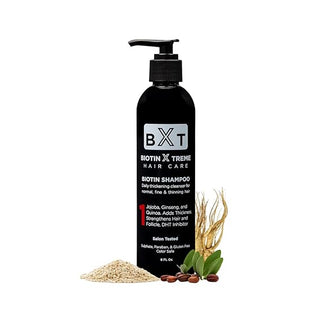
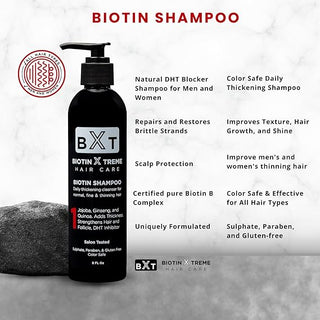
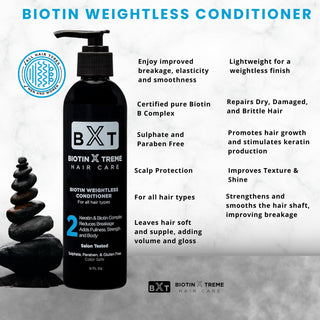
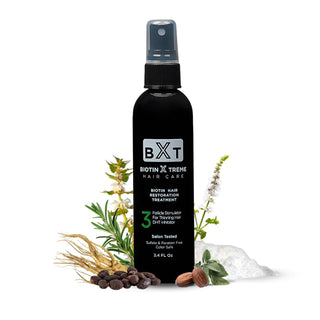
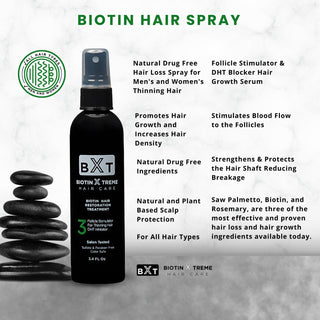
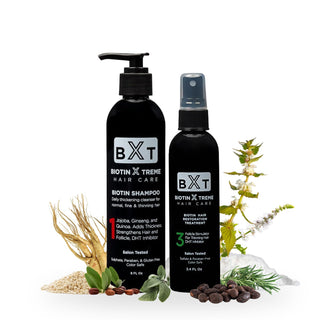
Since parting your hair isn't actually the cause of thinning, no shampoo or conditioner — ours included — is "fixing" damage from your part. What a biotin shampoo and keratin conditioner can reasonably do is support a healthy scalp and the hair you're growing as part of a normal routine. If thinning is a real, ongoing concern, that's worth raising with a dermatologist alongside anything you use at home — a Hair Restoration Spray or full Shampoo and Conditioner Set can be part of that routine, not a replacement for that conversation.
A Note From Our Founder
"I still get clients who come in convinced their part is 'causing' their hair loss, usually after seeing something online. I always tell them the same thing: the part isn't doing it, but it is where you'll spot thinning first, because it's the one strip of scalp that's always on display. That's actually useful information — it means your part is an early warning sign, not a cause — but it means the fix is figuring out why the hair is actually thinning, not just moving the line over."
Steve Haymes is the founder of Biotin Xtreme Hair Care and Cuts Inc., and a hair loss and hair care specialist with more than 40 years of salon experience, named Best of Atlanta by CBS News. Steve reviews our hair care and styling content for accuracy; questions about medical conditions should go to a dermatologist. Meet our founders.
Frequently Asked Questions
Do middle parts cause hair loss?
No. A middle part doesn't cause hair loss — it just keeps the same strip of scalp visible, so any thinning that's happening for another reason shows up there first. "Middle part balding" isn't a real diagnosis; it's a description of where existing thinning becomes visible.
Is it true that 80% of people with a middle part go bald?
No — that statistic doesn't trace back to any dermatological study we could find. It's an unsourced claim that spread on social media, not a measured outcome.
Does parting your hair cause baldness?
No. "Baldness" and "hair loss" have the same answer here — a part doesn't cause either. It just keeps one strip of scalp always visible, so thinning from another cause shows up there first.
Does a side part prevent hair loss?
No, and switching to a side part won't stop or reverse thinning. It can make hair look fuller at the root temporarily, since hair that's been trained into one direction for a long time tends to sit flatter, but that's a cosmetic effect, not a hair-loss treatment.
Can my hair part cause traction alopecia?
On its own, no. Traction alopecia comes from tight, pulling hairstyles — braids, ponytails, buns, weaves, extensions — not from where you part your hair. If you wear those styles regularly in addition to a fixed part, the tight styling is the habit to watch, not the part itself.
Should I switch up my hair part regularly?
It's a fine habit for style and the appearance of volume, but it isn't a hair-loss prevention strategy. If you're noticing real thinning, changing your part won't address the underlying cause.