Quick Answer
Can hair loss from PCOS be reversed? Sometimes. PCOS-associated scalp thinning can improve when the underlying hormonal or metabolic contributors are appropriately managed and the hair-loss condition itself is treated. However, complete regrowth is not guaranteed. The outlook depends on the type of hair loss, how long it has been present, the condition of the follicles, and the treatment used.
Importantly, not every person with PCOS who loses hair has the same type of hair loss. Female pattern hair loss, telogen effluvium, iron deficiency, thyroid disease, traction, alopecia areata and other conditions can look similar. A correct diagnosis is therefore the first step.
Medical Disclaimer
This article is for general educational purposes and does not diagnose or treat PCOS or hair loss. Medication decisions, laboratory testing and treatment plans should be discussed with a qualified healthcare professional. If you are pregnant, trying to become pregnant or breastfeeding, tell your clinician before using any medication for hair loss.
Contents
- Can PCOS Hair Loss Grow Back?
- How Does PCOS Cause Hair Loss?
- What Does PCOS Hair Loss Look Like?
- Is PCOS Really Causing Your Hair Loss?
- What Tests Might a Doctor Consider?
- How to Treat PCOS Hair Loss
- How Long Does PCOS Hair Regrowth Take?
- Can PCOS Cause Permanent Balding?
- Can Diet or Weight Management Help?
- Can Shampoo or Supplements Reverse PCOS Hair Loss?
- Where Does Biotin Xtreme Hair Care Fit In?
- When Should You See a Dermatologist?
- Frequently Asked Questions
Can PCOS Hair Loss Grow Back?
Yes, some people with PCOS-related hair thinning can regain density, particularly when the cause is identified early and treatment begins before follicles become severely miniaturized. Female pattern hair loss is a progressive condition, but treatment can slow progression and help some women regrow hair. The American Academy of Dermatology recommends diagnosis by a dermatologist because several different causes can produce similar patterns of thinning.
There is no reliable way to promise that all lost hair will return. Long-standing follicle miniaturization may limit the amount of regrowth, and a different underlying diagnosis may require a different treatment.
How Does PCOS Cause Hair Loss?
PCOS is associated with androgen excess in some patients and can also involve insulin resistance. Higher androgen activity can contribute to androgen-sensitive scalp follicles and female pattern hair loss in genetically susceptible women. PCOS itself, however, does not mean that every case of hair loss is androgen-driven.
In female pattern hair loss, susceptible follicles gradually become smaller and produce shorter, finer hairs. The visible result can be a widening part, reduced density around the crown, or more scalp showing through the hair. The AAD describes female pattern hair loss as the most common cause of hair loss in women and stresses that other conditions can look similar.
What Does PCOS Hair Loss Look Like?
- A widening central part or more visible scalp at the crown.
- A thinner ponytail or reduced overall density.
- Gradual thinning rather than a single sharply defined bald patch.
- Hair that appears progressively finer in affected areas.
- Hair loss occurring alongside other PCOS features such as irregular periods, acne or excess facial/body hair.
These features are clues, not a diagnosis. Sudden shedding, sharply defined patches, scalp pain or inflammation, eyebrow loss, or rapidly progressive hair loss should not automatically be attributed to PCOS.
Is PCOS Really Causing Your Hair Loss?
Before assuming that PCOS is the cause, consider other common possibilities. A dermatologist can examine the scalp and hair pattern and determine whether more than one condition is present.
|
Possible cause |
Typical clue |
Why it matters |
|
Female pattern hair loss |
Gradual widening part/crown thinning |
Often needs long-term hair-growth treatment. |
|
Telogen effluvium |
More sudden, diffuse shedding |
May follow illness, major stress, weight change or other triggers. |
|
Iron deficiency |
Diffuse shedding; risk may be higher with heavy periods |
Confirmed deficiency should be treated rather than guessed. |
|
Thyroid disease |
Diffuse thinning with other thyroid symptoms |
Requires appropriate medical evaluation. |
|
Traction alopecia |
Hairline/areas exposed to repeated pulling |
Stopping mechanical stress early can help prevent progression. |
|
Alopecia areata |
Smooth, discrete patches |
Needs a different medical approach. |
|
Scarring alopecia |
Inflammation, pain, scaling or loss of follicle openings |
Prompt treatment is important because follicle destruction can be permanent. |
What Tests Might a Doctor Consider?
There is no universal four-test panel that every person with PCOS-related hair loss should request. The appropriate evaluation depends on your symptoms, medical history, menstrual pattern, medications, examination and suspected cause.
- Androgen testing may be considered when clinical features suggest hyperandrogenism.
- Thyroid testing may be appropriate when symptoms or history raise concern for thyroid disease.
- Iron studies or other nutritional testing may be considered when deficiency is suspected.
- Additional testing may be appropriate when hair loss is rapid, severe, atypical or accompanied by other signs of endocrine disease.
Do not start iron, zinc, biotin or other supplements simply because hair is thinning. The AAD recommends supplements such as biotin, iron or zinc when testing shows a deficiency; unnecessary supplementation can be harmful.
How to Treat PCOS Hair Loss
Treatment should be individualized. The goal may be to manage PCOS features, address androgen activity when appropriate, treat the specific scalp hair-loss disorder, correct confirmed deficiencies and reduce ongoing follicle damage.
1. Minoxidil
Topical minoxidil is the most-recommended treatment for female pattern hair loss according to the AAD. It can help maintain or improve hair density, but it does not cure PCOS itself.
- Initial shedding can occur during the first several weeks.
- It can take about 6–12 months of consistent use to judge the response.
- Benefits generally depend on continued treatment; stopping can lead to renewed shedding and loss of the treatment-related gains.
- Scalp irritation and unwanted facial hair can occur.
- People who are pregnant, planning pregnancy or breastfeeding should avoid minoxidil unless specifically advised otherwise by their clinician.
2. Spironolactone and Other Anti-Androgens
Spironolactone is commonly used by dermatologists for female pattern hair loss and may be considered when androgen-related hair loss is suspected. However, the 2023 international PCOS guideline specifically notes that evidence for anti-androgens in the PCOS population is limited.
- It should be prescribed and monitored by an appropriate clinician.
- Possible adverse effects include increased urination, breast tenderness and changes in potassium or blood pressure.
- Anti-androgens should not be used during pregnancy. When pregnancy is possible, effective contraception and pregnancy planning should be discussed with a clinician.
3. Combined Hormonal Contraception
Combined hormonal contraceptives are an established option for managing several PCOS features in people who do not wish to become pregnant. They can reduce androgen-related symptoms such as acne and hirsutism. Their role in scalp hair loss should be individualized rather than presented as a guaranteed hair-regrowth treatment.
4. Metformin
Metformin is primarily used for selected metabolic features of PCOS rather than as a dedicated hair-regrowth drug. It may be appropriate for some people with PCOS, but it should not be presented as a standalone treatment proven to regrow scalp hair.
5. Inositol
The 2023 international PCOS guideline says inositol may be considered based on individual preferences and values, but notes limited clinical benefits and insufficient evidence to recommend a specific type, dose or combination. It should therefore not be marketed as a proven PCOS hair-regrowth treatment.
6. PRP, Microneedling and Low-Level Light Therapy
These treatments may be considered as adjuncts for selected hair-loss conditions, but the evidence is not as established as it is for standard approaches such as minoxidil. PRP in particular has promising early findings but needs more evidence, according to the AAD.
|
Option |
Primary role |
Evidence position |
Important point |
|
Minoxidil |
Direct scalp hair-growth treatment |
Most established |
Requires consistent ongoing use. |
|
Spironolactone |
Anti-androgen option |
Commonly used; PCOS-specific evidence limited |
Pregnancy precautions are essential. |
|
Metformin |
PCOS metabolic management |
Not a dedicated hair-regrowth treatment |
Use based on PCOS indications. |
|
Inositol |
PCOS complementary option |
Limited clinical benefits |
No universally recommended type/dose. |
|
PRP |
Adjunctive follicle stimulation |
Promising but evidence still developing |
Cost and repeated sessions may be factors. |
|
Microneedling |
Adjunctive treatment |
Evidence developing |
Should be performed safely/appropriately. |
|
LLLT |
Adjunctive light-based treatment |
Evidence developing |
Long-term effectiveness varies. |
How Long Does PCOS Hair Regrowth Take?
Hair grows slowly, so treatment should be judged over months rather than weeks. The exact timeline depends on the diagnosis and treatment.
|
Approximate period |
What may happen |
|
First few weeks |
Often little visible improvement; some treatments can temporarily increase shedding. |
|
Around 3–4 months |
Some people may notice less shedding or early changes. |
|
Around 6 months |
Treatment response becomes easier to assess. |
|
6–12 months |
Visible improvement in density may become more apparent if follicles remain viable. |
These are general expectations, not guarantees. The AAD notes that minoxidil and prescription treatments for female pattern hair loss often require several months before their effect can be judged.
Can PCOS Cause Permanent Balding?
PCOS-related thinning is not automatically permanent. However, long-standing follicle miniaturization can make regrowth more difficult. Scarring forms of alopecia are different: once a follicle is destroyed by scarring, hair cannot grow from that follicle. This is one reason rapid, patchy, painful or inflamed hair loss deserves prompt evaluation.
Can Diet or Weight Management Help?
A healthy, sustainable lifestyle is an important part of PCOS management, but there is no single diet proven to directly reverse scalp hair loss. The international PCOS guideline emphasizes healthy lifestyle management without endorsing one specific diet as universally superior.
For people who are overweight, weight loss can improve some PCOS features and metabolic measures, and ACOG notes that it may improve symptoms such as excess hair growth and acne. That should not be interpreted as a promise that weight loss alone will regrow scalp hair.
Can Shampoo or Supplements Reverse PCOS Hair Loss?
Shampoo and conditioner can improve hair feel, reduce breakage and make thinning hair look fuller, but they do not correct PCOS or reliably regrow miniaturized follicles. The AAD similarly notes that hair-loss shampoos may reduce breakage or improve appearance but cannot regrow hair or prevent female pattern hair loss from worsening.
Biotin is not a proven treatment for PCOS-related hair loss when a person is not deficient. Iron, zinc and other supplements should generally be used when a deficiency has been identified or a clinician recommends them.
Where Does Biotin Xtreme Hair Care Fit In?
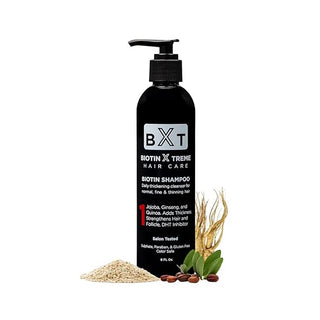
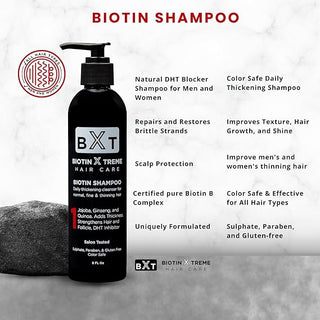
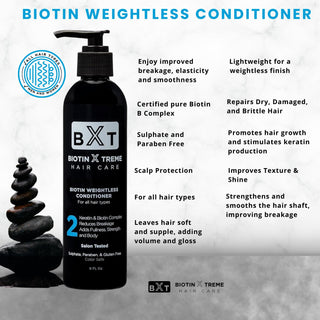
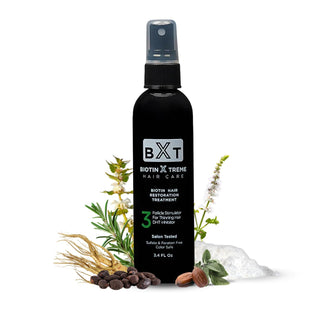
The limitations described above apply to any over-the-counter hair care line, not just one brand. Biotin Xtreme Hair Care is one example of a product line built around that supportive, cosmetic role rather than a claim to treat PCOS.
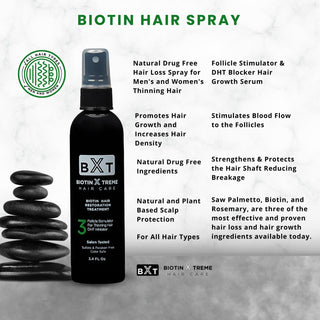
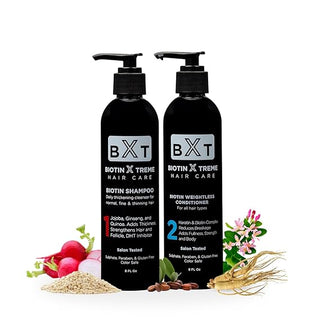
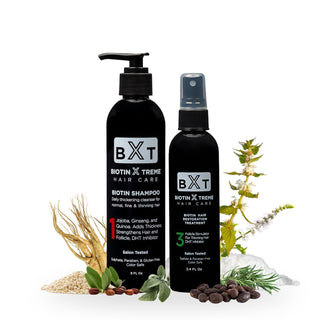
Its Biotin Shampoo and Biotin & Keratin Conditioner are sulfate- and paraben-free, which may help reduce the mechanical and chemical stress placed on hair that is already thinning; this is a hair-care benefit, not a treatment for the hormonal or metabolic drivers of PCOS-related hair loss. The brand's Hair Restoration Spray is formulated with saw palmetto and other ingredients that have been studied for a potential ability to inhibit the enzyme that converts testosterone into DHT at the follicle. That early research is considerably more limited than the clinical evidence behind prescription options such as minoxidil or spironolactone discussed above, and should be read as supportive rather than equivalent.
As with any product in this category, a routine like this may reasonably fit into the daily supportive layer described in the sections above: reducing breakage, avoiding added stress on vulnerable follicles, and providing mild, non-hormonal follicle support — alongside, never instead of, appropriate diagnosis and medical treatment for PCOS itself.
When Should You See a Dermatologist?
- Your hair loss is sudden or rapidly worsening.
- You have bald patches rather than gradual thinning.
- Your scalp is painful, inflamed, crusted or severely itchy.
- You are losing eyebrow or eyelash hair as well.
- Your hair loss started after a major illness, rapid weight change or significant stress.
- You have not been formally diagnosed with PCOS.
- You are considering prescription treatment such as spironolactone.
A dermatologist can determine whether the pattern is female pattern hair loss or another condition and can coordinate testing or referral when appropriate.
Frequently Asked Questions
Can hair loss from PCOS be reversed?
Sometimes. Improvement is possible when the underlying cause is identified and treated, but complete regrowth cannot be guaranteed. Earlier treatment may help preserve viable follicles.
Can I regrow hair lost from PCOS?
Some people can regrow part of the lost density, particularly when the follicles remain viable. The amount of regrowth depends on the diagnosis, duration of hair loss and treatment response.
Is PCOS-related balding permanent?
Not necessarily. PCOS-associated female pattern hair loss can often be managed, but long-standing miniaturization may limit regrowth. Scarring alopecia is different because destroyed follicles cannot regrow hair.
How do you get rid of PCOS hair loss?
There is no single cure. Treatment may involve managing PCOS, treating female pattern hair loss directly, correcting confirmed deficiencies and addressing another cause if PCOS is not the main reason for the shedding.
How can I thicken my hair with PCOS?
The most useful approach is to identify the type of hair loss first. Depending on the diagnosis, treatment may include minoxidil, clinician-directed prescription therapy, correction of deficiencies and gentle hair care to reduce breakage.
How long does it take for PCOS hair to grow back?
Hair regrowth generally takes months rather than weeks. Depending on treatment, visible improvement may take around 6–12 months, and results vary substantially.
Does treating PCOS stop hair loss?
Treating PCOS can help manage androgen and metabolic features, but scalp hair loss may require separate treatment. A person can have PCOS and female pattern hair loss at the same time.
Does minoxidil work for PCOS hair loss?
Minoxidil is the most-recommended treatment for female pattern hair loss. If PCOS is contributing to the condition, a clinician may combine management of PCOS with direct scalp treatment.
Can spironolactone help PCOS hair loss?
Spironolactone may help some women with female pattern hair loss and androgen-related symptoms, but PCOS-specific evidence is limited. It requires clinician supervision and must not be used during pregnancy.
Does metformin help regrow hair from PCOS?
Metformin is mainly used for selected metabolic aspects of PCOS. It should not be described as a proven standalone scalp hair-regrowth treatment.
Does biotin help PCOS hair loss?
Biotin can help when a person is deficient, but routine supplementation has not been shown to reliably reverse female pattern hair loss in people with adequate biotin levels.
Can losing weight reverse PCOS hair loss?
Weight management can improve some PCOS and metabolic features, but weight loss alone should not be presented as a guaranteed way to regrow scalp hair.
What blood tests are used to investigate hair loss with PCOS?
Testing is individualized. Depending on symptoms and examination, a clinician may investigate androgen status, thyroid function, iron status or other possible contributors rather than ordering the same panel for everyone.
How do I know if my hair loss is actually caused by PCOS?
Look for the pattern and timing, but do not self-diagnose from appearance alone. A dermatologist can distinguish female pattern hair loss from telogen effluvium, alopecia areata, traction and other conditions.
When should I see a dermatologist for PCOS hair loss?
Make an appointment when hair loss is persistent, progressive, sudden, patchy, inflamed or otherwise unusual, or when you want to start prescription treatment. Early evaluation can help prevent avoidable progression.
Key Takeaways
- PCOS-related hair loss can sometimes improve, but complete regrowth is not guaranteed.
- Not all hair loss in someone with PCOS is caused by PCOS; diagnosis matters.
- Female pattern hair loss is commonly treated with direct scalp therapy such as minoxidil, while PCOS treatment is individualized.
- Anti-androgens such as spironolactone require medical supervision and pregnancy precautions.
- Metformin and inositol should not be presented as proven standalone hair-regrowth treatments.
- Supplements should generally be used when a deficiency is identified or a clinician recommends them.
- Hair regrowth takes months, so treatment response should not be judged after a few weeks.
Medical References
- American Academy of Dermatology (AAD). Thinning hair and hair loss: Could it be female pattern hair loss? https://www.aad.org/public/diseases/hair-loss/types/female-pattern
- Monash Centre for Health Research and Implementation. International Evidence-Based Guideline for the Assessment and Management of Polycystic Ovary Syndrome, 2023. https://www.monash.edu/medicine/mchri/pcos/guideline
- American College of Obstetricians and Gynecologists (ACOG). Polycystic Ovary Syndrome (PCOS). https://www.acog.org/womens-health/faqs/polycystic-ovary-syndrome-pcos
- American Academy of Dermatology (AAD). Hair loss: Diagnosis and treatment. https://www.aad.org/public/diseases/hair-loss/treatment/diagnosis-treat
- American Academy of Dermatology (AAD). Dermatologist-approved pregnancy skin care. https://www.aad.org/public/everyday-care/skin-care-secrets/routine/pregnancy-skin-care